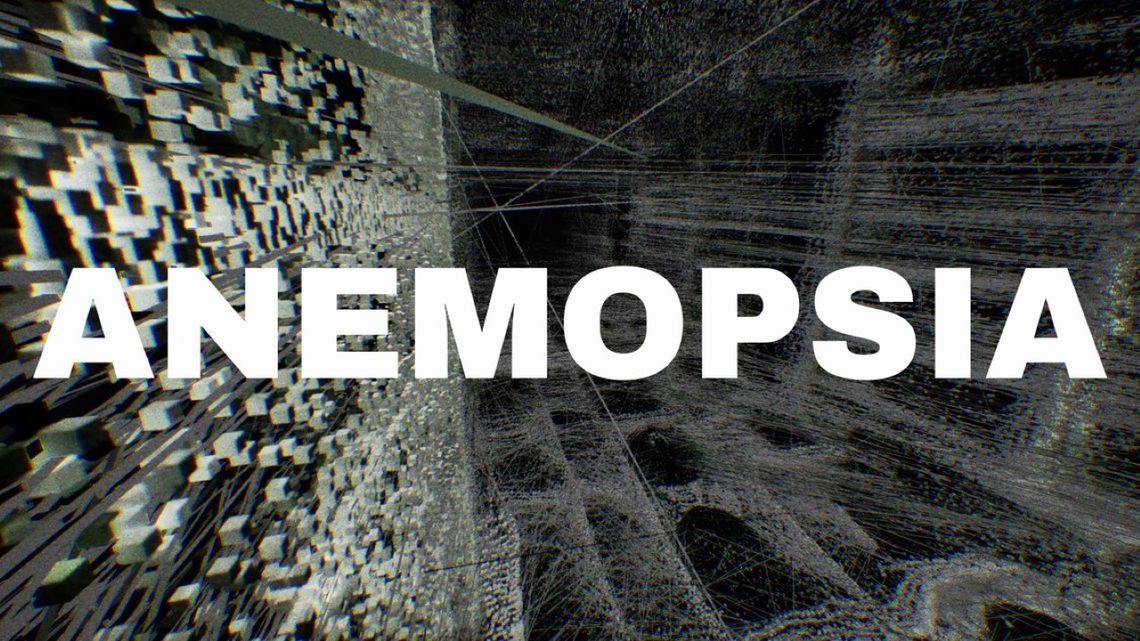
[A szöveg csak angol nyelven érhető el] ANEMOPSIA is a real-time audiovisual performance about memories without an origin: the sensation of remembering something that never happened, somewhere that never existed.
The title combines *anemoia*, nostalgia for a time or place we never personally lived, and *kenopsia*, the uncanny atmosphere of a familiar place emptied of its presence. ANEMOPSIA exists between these two conditions, where familiarity has no biography and nostalgia has nothing to return to.
Memory is usually understood as what remains after experience. An event disappears, but something of it survives as a trace. ANEMOPSIA begins with the trace, but removes the event.
These are not memories of forgotten things. They are memories of things that were never there. Fragments of places with no geography, recollections with no original, traces of a past that never took place. Their familiarity cannot be located, yet their absence can still be felt.
The performance gives these impossible memories a temporary form without resolving their origin.
Images surface as if recalled. Spaces gather without ever becoming complete. Sound returns altered, as though recollection itself were continuously rewriting what it is trying to preserve. Nothing settles into a definitive state. Forms emerge, persist for a moment, transform and dissolve.
ANEMOPSIA treats memory not as an archive, but as unstable matter. Something can feel deeply familiar without ever having been known. It can carry nostalgia without possessing a past. It can appear to be disappearing even though there was never an original to lose.
The work inhabits this impossible loss: the absence of something that was never present, the fading of something that was never whole.
This condition is embedded in the way the performance itself is created. ANEMOPSIA is generated entirely in real time through custom artificial intelligence and generative systems. Sound emerges from AI music algorithms developed specifically for live performance and trained on a personal archive of sonic material. In parallel, custom visual algorithms generate imagined spaces, reconstruct them as unstable three-dimensional environments, and continuously transform them in response to the performance.
There is no fixed audiovisual sequence to reproduce. Sound and space are continuously generated, reconstructed and lost in the present.
The technology therefore follows the same logic as memory itself: it attempts to give form to something that has no original.