[A szöveg csak angol nyelven érhető el] Year: 2026
Medium: TouchDesigner, After Effects, Photogrammetry, Machine Imagination
Hypnagogia explores the threshold between wakefulness and sleep, that fleeting moment when the mind gradually stops obeying the logic of conscious thought but has not yet entered the fully formed dimension of dreams. It is an unstable territory in which perception begins to fragment and images emerge without following the ordinary rules of reality.
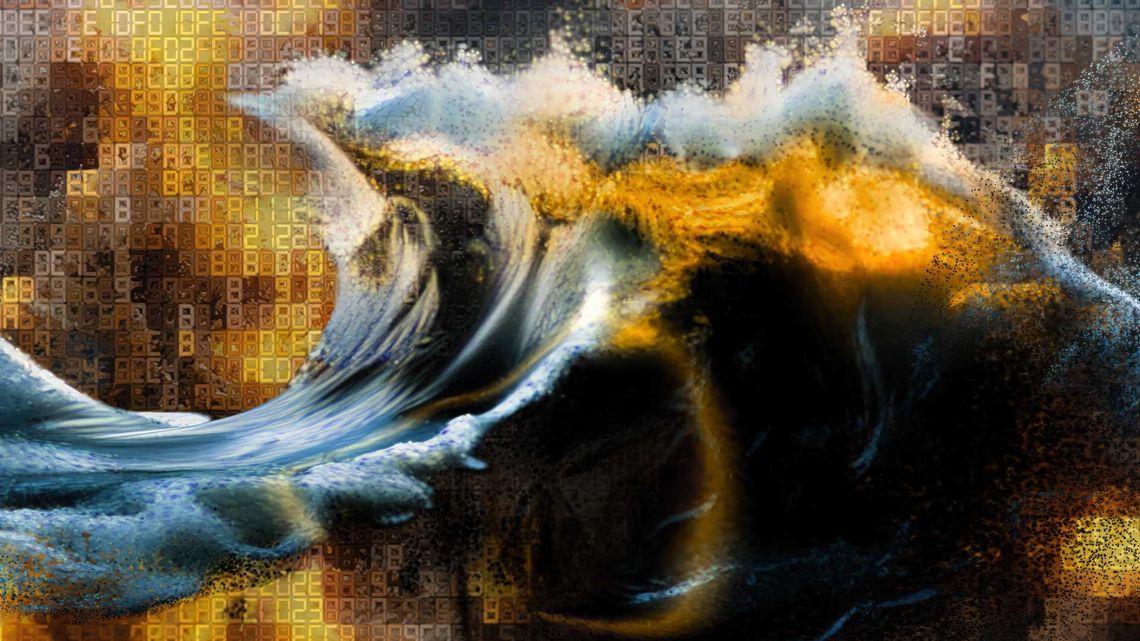
Shapes breathe, colours seem to carry sound, and matter remains suspended between body, plant, and marine abyss, never completely settling on what it is about to become. Forms appear, transform, and dissolve before they can acquire a stable identity, creating a continuously evolving visual environment in which boundaries remain deliberately uncertain.
The work draws on the hypnagogic state as a condition in which fragments, sensations, colours, and forms can emerge independently from a coherent narrative. Rather than reconstructing a specific dream or memory, Hypnagogia evokes an experience that is simultaneously intimate and universal: a transitional state generated by the mind and experienced in different forms by everyone.
Within the immersive environment, this unstable mental landscape expands beyond the limits of an individual perception and becomes spatial. Images no longer occupy a defined frame but extend into the surrounding architecture, enveloping the viewer and transforming the relationship between body, image, and space.
Hypnagogia thus translates the moment preceding sleep into a traversable environment. The viewer does not simply observe a sequence of oneiric images from the outside, but enters a fluid visual dimension in which forms remain suspended between recognition and abstraction, reality and imagination, wakefulness and dream.
Music & sound design: Vincenzo Pizzi