[A szöveg csak angol nyelven érhető el] Year: 2001
Medium: Macromedia Shockwave Flash
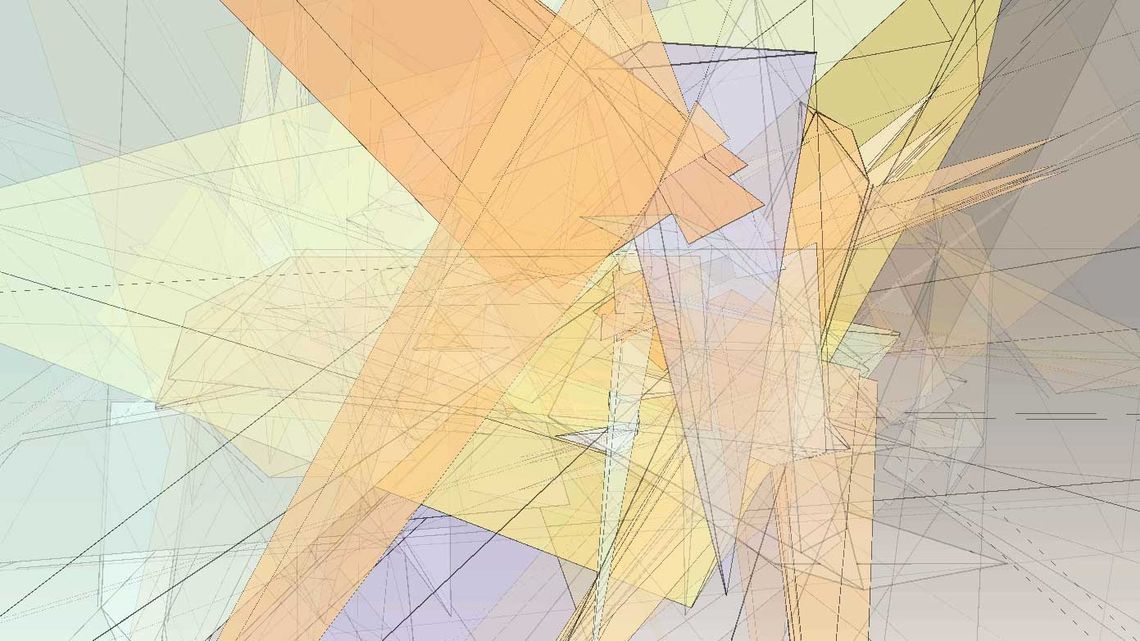
Schematic Beta is an early generative work by Joshua Davis, created during a period in which the web was becoming a space for experimentation with code, interaction and computational image-making.
Rather than approaching the digital image as a fixed composition, the work belongs to Davis’s exploration of systems in which visual outcomes emerge from sets of rules. Code becomes part of the creative process: forms, structures and graphic elements are organised through computational procedures that introduce variation and unpredictability within a framework designed by the artist.
This approach reflects a fundamental shift in digital creation at the beginning of the 2000s. The artist no longer determines every element of the final image directly, but constructs the conditions through which images can emerge. Authorship moves from composing a single visual result towards designing a system capable of generating multiple possible configurations.
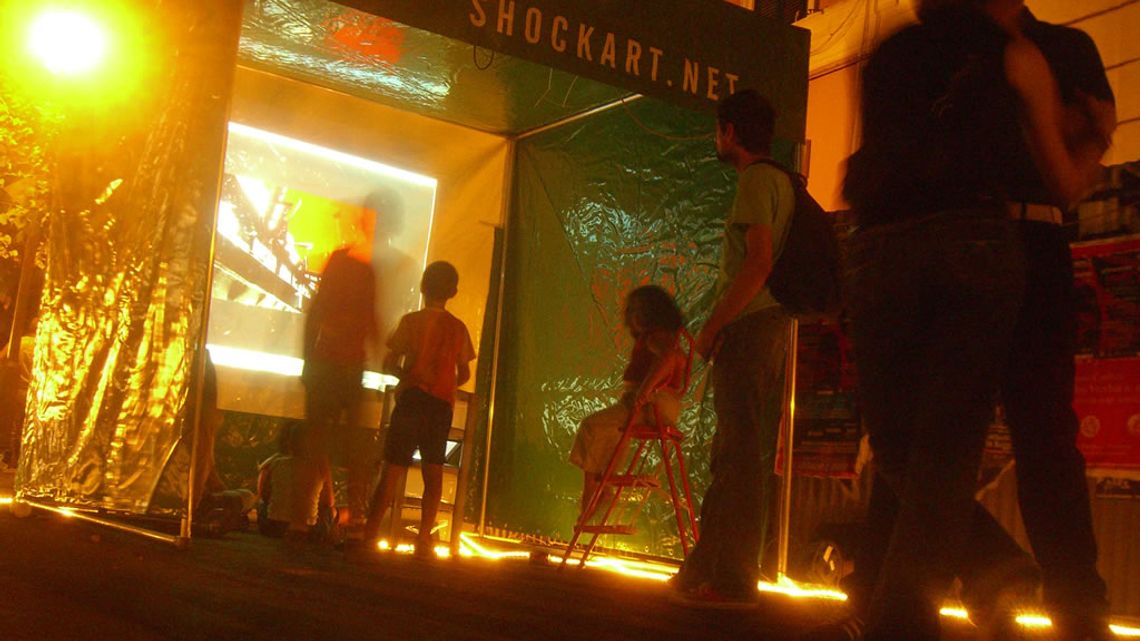
Schematic Beta was presented by Shockart.net at Flash Forward San Francisco in 2002, within an international context in which Flash was rapidly evolving beyond its original role as a tool for web animation and interface design. Artists such as Davis were using its programming environment to investigate generative processes, randomness and the possibility of creating visual systems that unfold through computation.
More than two decades later, Schematic Beta also reflects the technological conditions of the early web. Created within an ecosystem of software, formats and interfaces that has largely disappeared, the work belongs to a generation of digital artworks whose preservation requires not only conserving their files, but maintaining the possibility of experiencing their original computational behaviour.
Presented again within HyperMedia, Schematic Beta connects this early moment of web-based experimentation with contemporary generative practices. The technologies have changed radically, but the underlying question remains remarkably current: what happens when the artist stops designing the image itself and begins designing the rules from which the image emerges?